the short version
Magnesium matters. The hype around it still needs context.
Adult women generally need 310–320 mg of magnesium per day from food, beverages and supplements combined. Magnesium has established roles in normal muscle and nerve function, blood glucose and blood-pressure regulation, bone, protein and DNA production. Supplementation can help fill an intake gap, but evidence that magnesium universally fixes sleep, anxiety, cramps or “hormone imbalance” is much less certain. For adults, NIH sets an upper limit of 350 mg/day from supplements and medications unless a clinician directs otherwise; magnesium naturally present in food does not count toward that supplemental upper limit.
the foundation
What does magnesium actually do?
Magnesium is a mineral your body requires for hundreds of enzyme-related processes. NIH highlights its role in regulating muscle and nerve function, blood sugar and blood pressure and in making protein, bone and DNA. That is why magnesium is relevant across many areas of health—but the breadth of its normal physiology also makes it easy for marketing to overreach.
An essential role does not mean taking extra magnesium improves every process indefinitely. If dietary intake is already adequate, more is not automatically better. The useful first question is whether you are meeting your nutritional needs and whether there is a specific evidence-based reason to supplement.
daily needs
How much magnesium do women need?
310 mg/day from all dietary sources.
320 mg/day from all dietary sources.
Generally 350–360 mg/day for adult women, depending on age.
These are total daily intake recommendations. They are not instructions to buy a supplement containing the full amount. If food provides 200 mg, for example, a supplement is only one possible way to address the remaining dietary gap.
For the full dosing context, see How Much Magnesium Should Women Take?
food counts
What foods provide magnesium?
Magnesium occurs naturally in many plant foods. Useful sources include legumes, nuts, seeds, whole grains and leafy green vegetables. Fortified foods can also contribute. A varied diet can therefore provide a meaningful amount before a supplement enters the picture.
a better starting point
Think total intake, not supplement size.A 275 mg capsule is not “better” than a 150 mg capsule simply because the number is larger. Your diet, the elemental magnesium amount, tolerance and reason for supplementing all matter.
low magnesium
What happens when magnesium intake or status is low?
Short-term low dietary intake does not necessarily create obvious symptoms because the kidneys can help conserve magnesium. More significant or prolonged deficiency can cause loss of appetite, nausea, vomiting, fatigue and weakness; severe deficiency can produce numbness, tingling, muscle cramps, seizures, personality changes and abnormal heart rhythm.
Those symptoms are nonspecific. Fatigue, cramps or poor sleep do not prove a magnesium deficiency. Certain gastrointestinal diseases, type 2 diabetes, long-term alcohol misuse and some medications can increase risk, and laboratory or clinical assessment may be appropriate when deficiency is suspected.
read the form
What are the different forms of magnesium?
Supplements can contain magnesium citrate, glycinate/bisglycinate, oxide, chloride, lactate, aspartate and other salts or chelates. The compound affects characteristics such as solubility, elemental-magnesium percentage and gastrointestinal tolerance.
NIH notes that forms that dissolve well in liquid tend to be more completely absorbed and identifies citrate, lactate, chloride and aspartate among forms with relatively higher bioavailability than magnesium oxide and sulfate. That does not create a single “best form” for every person or goal.
The Supplement Facts panel should state the amount of elemental magnesium. That number is more useful nutritionally than comparing the total weight of two different magnesium compounds.
why glycinate is everywhere
What is magnesium glycinate?
Magnesium glycinate—often called magnesium bisglycinate—pairs magnesium with glycine. It has become especially popular in nighttime and relaxation products. The form can be a reasonable way to supplement magnesium, but popularity does not establish that it is uniquely effective for every sleep, stress or recovery goal.
A recent randomized, double-blind, placebo-controlled trial in 155 adults reporting poor sleep found a statistically greater improvement in insomnia-severity scores after four weeks of magnesium bisglycinate compared with placebo. The effect size was small, and the authors called for longer studies and better identification of who may respond. That is encouraging evidence, not a license to market magnesium glycinate as an insomnia cure.
Compare it with another common form in compare glycinate and citrate by tolerance and intended use.
sleep, with context
Does magnesium actually help sleep?
The overall evidence is mixed. A systematic review found that observational studies often associated magnesium status with sleep quality, while randomized trials produced uncertain or contradictory findings. A meta-analysis in older adults with insomnia reported shorter sleep-onset latency with magnesium, but the underlying evidence was low to very low quality and trials had meaningful risk of bias.
Newer form-specific trials add useful information, but they do not erase the limitations of the broader literature. The responsible conclusion is that magnesium may help some people or some sleep outcomes, particularly where intake or status is low, but it is not an established treatment for every sleep disorder.
Persistent insomnia can involve sleep schedule, medications, mental health, pain, menopause symptoms, breathing disorders and other factors. Read Magnesium for Sleep: Does It Actually Help?
muscle + recovery
What about muscle function, cramps and workout recovery?
Magnesium's role in normal muscle and nerve function is established. That does not mean every muscle cramp or twitch is caused by low magnesium or that taking extra magnesium automatically improves athletic recovery.
Exercise recovery depends on training load, sleep, energy intake, protein, hydration and many other factors. Meeting magnesium needs is part of adequate nutrition; it should not be presented as a replacement for the larger recovery picture.
morning or night?
When should women take magnesium?
There is no universally proven best clock time. Evening is popular because magnesium is marketed around relaxation and sleep, and it can be an easy routine anchor. But magnesium is an essential nutrient used throughout the body, not an ingredient that only works after dark.
Follow the product directions and consider gastrointestinal tolerance and medication timing. Some medicines need to be separated from magnesium because it can interfere with absorption. Read When Is the Best Time to Take Magnesium?
midlife context
Does anything change for women over 40?
The RDA for women age 31 and older is 320 mg/day, so turning 40 does not create a new magnesium category. What can change is context: medication use, dietary patterns, sleep disruption, menopause symptoms, bone-health priorities and medical conditions may become more relevant.
Magnesium participates in bone health, but it is one part of a broader picture that includes calcium, vitamin D, protein, resistance and weight-bearing exercise and individual hormonal or medical factors. Claims that magnesium universally “balances hormones” after 40 go beyond the evidence.
safety first
Can you take too much magnesium?
Yes. Magnesium naturally present in food is generally not a concern in healthy people because the kidneys remove excess amounts. Supplements and magnesium-containing medications are different. NIH sets the adult upper limit for supplemental or medication magnesium at 350 mg/day unless higher intake is medically supervised.
High supplemental intake can cause diarrhea, nausea and abdominal cramping. Extremely high intake can cause serious toxicity. Risk increases when kidney function is impaired because excess magnesium may not be cleared normally. Magnesium can also interact with certain antibiotics, bisphosphonates and other medications.
Pregnancy and breastfeeding change nutrient requirements but do not justify exceeding supplement directions without appropriate guidance. Read Magnesium Side Effects, Interactions & Who Should Be Careful.
how to choose
What should women look for in a magnesium supplement?
Elemental magnesium. Use the Supplement Facts amount, not a front-label compound weight.
A clearly identified form. Glycinate, citrate and other forms are not interchangeable simply because they contain magnesium.
A serving that fits total intake. Remember the RDA includes food and the adult supplemental upper limit is separate.
A formula you tolerate. Gastrointestinal effects are a practical reason people switch forms or serving sizes.
Claims that match evidence. Be skeptical of products promising to cure insomnia, anxiety, hormone problems or every muscle symptom.
our take
Unwind
Magnesium from magnesium glycinate in a straightforward evening-friendly formula. Review the complete Supplement Facts and serving directions before deciding how it fits your total magnesium intake.*
See Unwind + Supplement Facts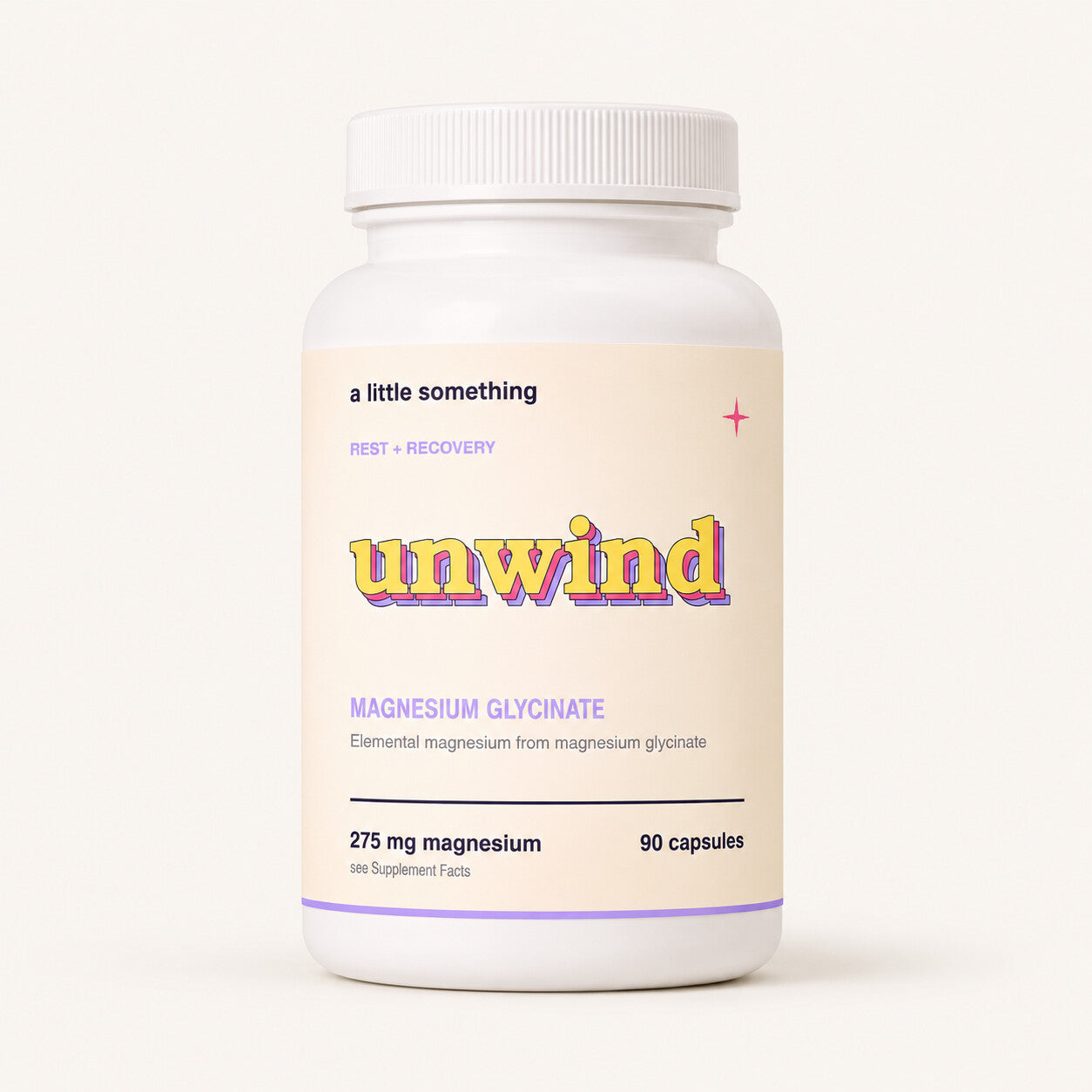
the magnesium library
Go deeper on the question you actually have.
Magnesium for women FAQs
Do women need a special type of magnesium?+
No. Magnesium itself is not sex-specific. The appropriate form and amount depend on dietary intake, tolerance, medical context and the reason for supplementation.
Is magnesium glycinate better than citrate?+
Not universally. Both provide magnesium but differ in formulation and practical characteristics. Compare elemental magnesium, tolerance and evidence for your intended use.
Is 320 mg the amount I should take as a supplement?+
No. The 320 mg RDA for women age 31+ is total magnesium from food, beverages and supplements. NIH's adult upper limit for magnesium from supplements and medications is 350 mg/day unless medically directed.
Does magnesium glycinate make you sleepy?+
Magnesium glycinate is often used in nighttime routines, and newer research suggests modest sleep-related effects in some adults. It should not be treated as a guaranteed immediate sedative.
Can magnesium interact with medication?+
Yes. Magnesium can interfere with absorption of some medicines, including certain antibiotics and bisphosphonates. Medication-specific timing should be discussed with a pharmacist or healthcare professional.
receipts, please
Sources
- NIH Office of Dietary Supplements — Magnesium Fact Sheet for Health Professionals
- Arab A, et al. The Role of Magnesium in Sleep Health: A Systematic Review.
- Mah J, Pitre T. Oral magnesium supplementation for insomnia in older adults: systematic review and meta-analysis.
- Magnesium Bisglycinate Supplementation in Healthy Adults Reporting Poor Sleep: randomized placebo-controlled trial.
This article is educational and is not individualized medical advice. Dietary supplements are not intended to diagnose, treat, cure or prevent disease. Speak with a qualified healthcare professional when appropriate for your circumstances.