A Little Something · The buying guide
Best Supplements for Women Over 40: A Practical, No-Hype Buying Guide
A Little Something Editorial · Sources reviewed
Compare by goal →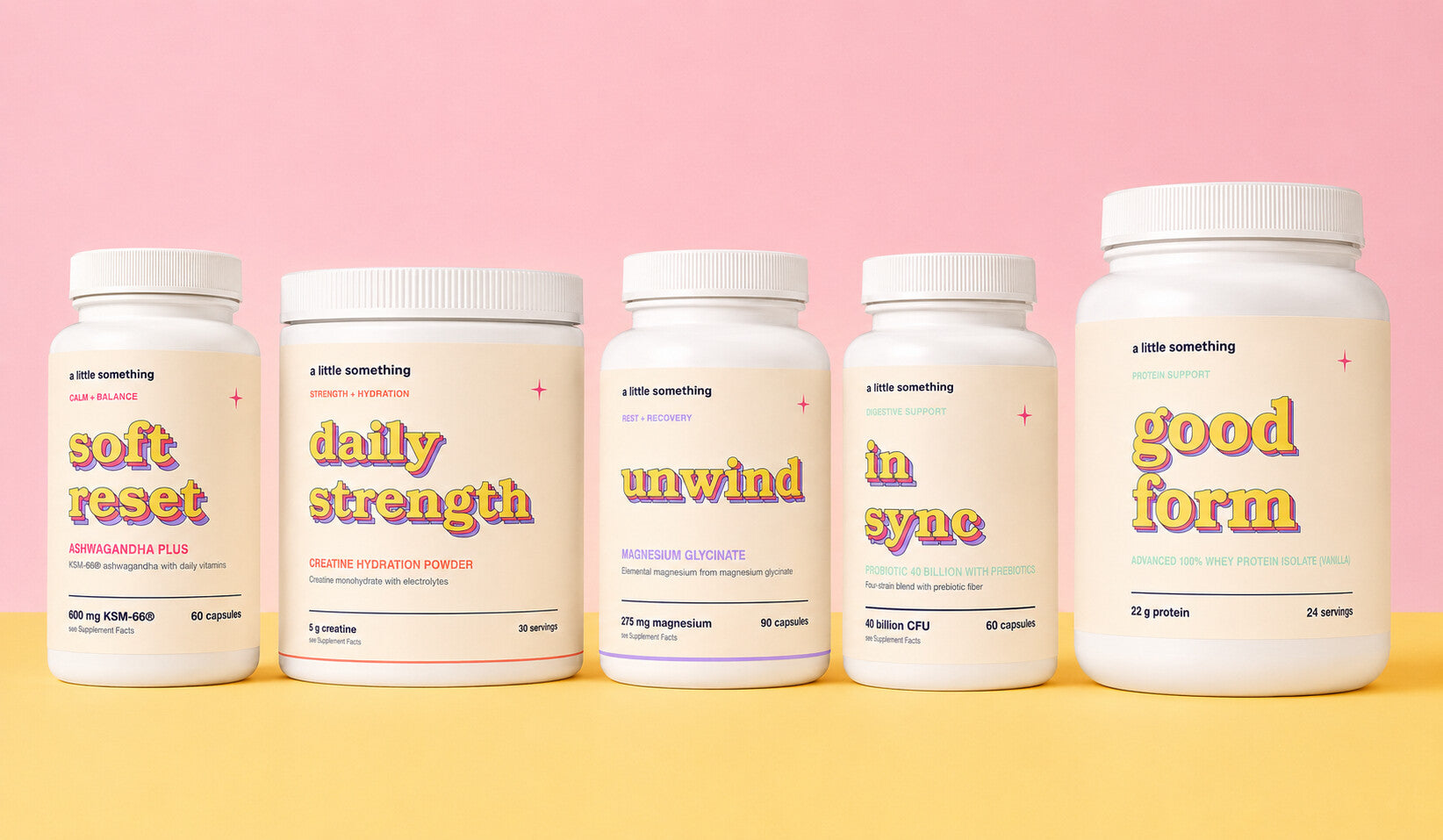
Start with the gap, not the age label. The best supplements for women over 40 are the ones that address an identifiable need. Protein powder may make busy meals easier; creatine is an optional training companion; vitamins, minerals and gut products deserve a specific reason. Turning 40 is not a shopping list.
For a week that includes work, Pilates, friends and everything in between, a routine should be easy to explain and easy to keep. This guide helps you compare categories, decide what deserves your budget, and leave the rest on the shelf.
How we chose: These are editorial category picks based on usefulness for a stated goal, evidence limits, label clarity and practical fit. The numbered order is a reading order, not a clinical ranking or a list of products every woman needs. A Little Something sells supplements and benefits from purchases of the TAL examples below. We have not conducted comparative product testing; ingredient research does not establish that our finished products produce the same results.
First, find your starting point
- Is a symptom driving the purchase? Persistent fatigue, sleep trouble or digestive changes deserve an assessment rather than a bigger basket. A clinician or pharmacist can help review health conditions, medicines and whether testing is useful.
- Is there a food gap? Look at a few ordinary days of meals. If protein or fiber is consistently difficult to fit in, start with food changes, then compare a convenience product if that would help.
- Is there a clear training goal? If strength work is part of your week, read the protein and creatine sections. Attending a Pilates class alone does not establish a supplement need.
- Has a nutrient need been identified? Let intake, risk factors and appropriate clinical advice guide vitamin and mineral choices. Routine testing is not required for every healthy shopper.
- None of those apply? You may not need to buy anything. Keep that option open.
Compare supplements by your actual goal
Use this as a shortlist of questions, not a suggested stack. On a phone, swipe the table to compare all columns.
| Your goal | Category to consider | Check before buying | Reason to pass |
|---|---|---|---|
| Everyday strength | Protein convenience; optional creatine | Food intake and consistent resistance exercise | You are expecting a supplement to do the training for you |
| Easier protein at meals | Protein powder | Protein per serving, allergens, taste and cost per serving | Meals already meet your needs conveniently |
| An evening routine | Magnesium, when a nutritional gap warrants it | Elemental amount, digestive tolerance and medicines | You want a guaranteed sleep fix |
| Gut support | Fiber, a prebiotic or a specific probiotic | Which need the product addresses | The main selling point is a bigger CFU number |
| Stress routine | Optional botanical after a safety review | Extract, all active ingredients and interactions | The promise is “hormone balance” without useful evidence |
Seven categories worth understanding
1. Protein powder: useful convenience
May fit: Meals regularly leave a protein gap. May not: Food already covers your needs comfortably. Powder is optional.
Look for: Protein per serving, ingredients you want, an allergen statement and quality verification you can check. Whey comes from milk; plant options may better fit your preferences. Review dietary restrictions with your clinician.
Food first: Yogurt, eggs, tofu, beans, fish or poultry can make a meal more substantial. Read protein and whey after 40 and daily protein needs. Source: NIH ODS.
2. Creatine monohydrate: an optional strength companion
May fit: Consistent resistance exercise and a strength goal. May not: You expect results without training or a proven Pilates-specific benefit.
Look for: A declared monohydrate amount and verifiable quality testing. More expensive forms are not automatically better. Consider extra ingredients, medical context and digestive tolerance; body-water changes can move scale weight.
Routine first: Build consistency in strength work. Meat and fish supply creatine, but are not dose-equivalent replacements for supplements. Read creatine evidence for women over 40. Source: NIH ODS.
3. Magnesium: choose by intake and tolerance
May fit: Your diet or clinical context suggests a magnesium shortfall. May not: The only reason is a restless night. Neither glycinate nor citrate guarantees better sleep; NCCIH describes limited sleep evidence.
Look for: Elemental magnesium in Supplement Facts, serving size and the total from all your products. Citrate is more likely to loosen stools; glycinate is often described as gentler, but individual tolerance varies and direct comparisons are limited. Supplemental magnesium can cause diarrhea and interact with some antibiotics and osteoporosis medicines. Kidney disease calls for individualized guidance.
Food first: Nuts, seeds, beans, whole grains and leafy greens. Compare magnesium forms and read about magnesium needs in midlife. Sources: NIH ODS and MedlinePlus on citrate.
4. Vitamin D: when intake or clinical context warrants it
May fit: Limited dietary intake, relevant risk factors or a clinician-identified need. May not: A high-dose product marketed as an automatic requirement after 40. Routine vitamin D testing is not recommended for all healthy people.
Look for: The amount per serving and overlap with a multivitamin or botanical blend. More is not necessarily better, and excessive vitamin D can be harmful. Review medicine interactions and whether testing is indicated with a clinician.
Food first: Fatty fish and fortified foods can contribute; read labels because amounts vary. This is not a reason to increase unprotected sun exposure. Source: NIH ODS vitamin D fact sheet.
5. Omega-3: let your usual diet guide the question
May fit: You rarely eat fish and want to discuss whether an EPA/DHA supplement suits your needs. May not: You expect a universal preventive benefit or a replacement for prescribed treatment.
Look for: EPA and DHA amounts, not just total fish-oil weight. Algae-based products offer an alternative source; check which fatty acids they provide. Compare testing information, allergens and expiration dates. Discuss use with a pharmacist if you take anticoagulants.
Food first: Fish can supply EPA and DHA. Walnuts and flax provide ALA, which is not nutritionally identical to EPA/DHA. Source: NIH ODS omega-3 fact sheet.
6. Fiber, prebiotics and probiotics: three different choices
May fit: A specific dietary or digestive need. May not: A vague desire to “reset” your gut without identifying what you want to change.
For fiber: Compare the type and amount with the gap in your diet. Add fiber gradually, follow fluid instructions, and check the product's medicine-spacing directions with a pharmacist. Beans, oats, fruit, vegetables and whole grains are useful food options. Source: NIDDK.
For prebiotics: Look for a named ingredient and a clear purpose; prebiotics feed particular microbes and are not interchangeable with probiotics. For probiotics: Look for complete strain identification, evidence for the intended outcome, viable counts through expiration, and storage directions. More CFUs or strains do not automatically mean more benefit. People with serious illness or impaired immunity need particular caution. Cultured foods can fit meals, but do not automatically substitute for a studied strain. Read prebiotics versus probiotics and how to read CFU claims. Source: NIH ODS.
7. Botanicals: optional, with more questions to ask
May fit: A specific goal after an evidence and safety review. May not: You want a general “hormone balance” blend or a menopause treatment.
Some ashwagandha preparations have limited evidence for stress or sleep, but studies use different extracts and long-term safety remains uncertain. It can cause digestive upset or drowsiness; rare liver injury has been reported. Avoid it during pregnancy or breastfeeding. Thyroid or autoimmune disorders, upcoming surgery and medicines require particular attention.
Look for: The extract, amount and every additional active ingredient. A multi-ingredient formula needs a review of the whole label. Start with our ashwagandha safety guide and evidence after 40.
Routine first: Protect sleep time, make stressors more manageable where possible, and seek support when needed. No botanical replaces care for persistent symptoms. Source: NCCIH.
What to skip when building your basket
- Detoxes and fat burners: They do not earn a place in this practical, gap-based routine.
- Proprietary “hormone balance” blends: Pass when the formula hides individual amounts or the promise outruns the evidence.
- Redundant stacks: Check vitamins, minerals and botanicals across every product, including powders and combination formulas.
- Products bought only to unlock a discount: A cheaper bundle is still unnecessary spending if you do not need everything inside.
A five-question label check
- Can I name the gap or goal this addresses?
- Can I see the amount per serving and how many capsules or scoops that requires?
- Can I verify the manufacturer's testing claim and what the testing covers?
- Have I checked allergens, overlapping ingredients and medicines?
- Does the cost per usable serving fit my budget, including any subscription commitment?
FDA does not approve supplements for safety and effectiveness before they are marketed. A quality-testing claim is not proof that a product will produce a clinical benefit. Ask the manufacturer for supporting information when a label leaves questions unanswered. Read FDA's supplement questions and answers.
Build a smaller routine with a clear purpose
Write down your reason before choosing a product. If none of these categories fits, keep your routine as it is. If one does, compare labels before deciding whether a single product or a ready-made set makes sense.
TAL examples to compare, if the category fits
- Good Form — whey protein isolate: a vanilla protein option; compare serving size and the milk-allergen information.
- Daily Strength — creatine with electrolytes: compare the full formula with plain creatine monohydrate, especially if you already use an electrolyte product.
- Unwind — magnesium glycinate: compare elemental magnesium and the number of capsules per serving.
These are examples from our store, not category winners. Vitamin D, omega-3 and fiber deserve the same consideration whether you buy them elsewhere or meet those needs through food. Our botanical and probiotic guides can help you evaluate those categories before shopping.
About this guide
This is a purchase-selection guide, not a dosage plan, diagnosis or menopause treatment recommendation. The linked NIH, NCCIH, NIDDK, MedlinePlus and FDA sources inform the category discussion; none endorses TAL. Product examples were checked against the store's published product information on September 8, 2026. Check the current package before use.
Read our editorial standards. Review supplement choices with a qualified healthcare professional when you take medicines, have a medical condition, are pregnant or breastfeeding, or are preparing for surgery.