the short version
Yes, women can benefit from creatine.
Creatine helps supply energy for short, intense muscular efforts. Research supports creatine supplementation for strength and high-intensity exercise performance, and women-specific research suggests benefits for strength and exercise performance as well. Creatine monohydrate is the most widely studied form. A common maintenance intake used in research is 3–5 grams per day.
First: what is creatine?
Creatine is a compound your body already makes and stores largely in skeletal muscle. It helps replenish ATP—the energy currency your muscles rely on during short bursts of demanding activity. You also get some creatine from animal foods, but supplemental doses are higher than typical dietary intake.
That is why creatine is most closely associated with activities such as resistance training, sprinting and repeated high-intensity efforts rather than long-duration endurance exercise.
why women take it
What are the benefits of creatine for women?
Creatine can support strength, power and repeated high-intensity exercise performance when paired with appropriate training.
By helping rapidly regenerate muscular energy, creatine can support the type of repeated effort used in lifting and other high-intensity training.
Research focused on women is smaller than the overall creatine evidence base, but reviews report benefits for strength and exercise performance in premenopausal women.
There is growing research into creatine across different stages of women's lives, but some areas—including cognition, pregnancy and specific hormonal life stages—still need more research. We do not treat emerging findings as established product promises.
How much creatine should women take?
For general supplementation, 3–5 grams of creatine monohydrate per day is a commonly studied maintenance range. Daily Strength provides 5 grams of creatine monohydrate per serving, alongside electrolytes. For the daily amount and optional loading choice, see our creatine dosage for women guide.
make it easy
You do not need a complicated calculator.Follow the serving directions on your product. Consistency is more useful than creating a routine so elaborate that you stop following it.
When should women take creatine?
There is no need to build your entire day around a tiny creatine window. For most people, the practical priority is taking it consistently. Before training, after training, or at another repeatable time can all make the habit easier to maintain.
That is also why we designed Daily Strength as a once-daily scoop rather than something that requires a complicated supplement schedule.
Do women need a creatine loading phase?
No. A loading phase is one way researchers rapidly increase muscle creatine stores, but it is not required to use creatine. A traditional research protocol may use roughly 20 grams per day divided into several servings for 5–7 days, followed by 3–5 grams daily. Taking a regular daily maintenance amount can increase stores more gradually.
Will creatine make you gain weight or look bulky?
Creatine can increase body weight because it increases water retention. That is different from saying creatine automatically adds body fat or makes someone “bulky.” How your physique changes depends heavily on training, nutrition and your individual response.
The NIH notes that some weight gain from water retention is common with creatine use. If seeing a short-term scale change would concern you, it is worth knowing that before starting.
What should women look for in a creatine supplement?
Creatine monohydrate. It is the most widely used and studied form.
A clear dose. You should be able to see exactly how many grams you are getting per serving.
A routine you will actually follow. Fancy is not automatically better.
our take
Daily Strength
5 g creatine monohydrate + electrolytes in one daily lemon-flavored scoop for strength, performance and hydration support.*
Shop Daily Strength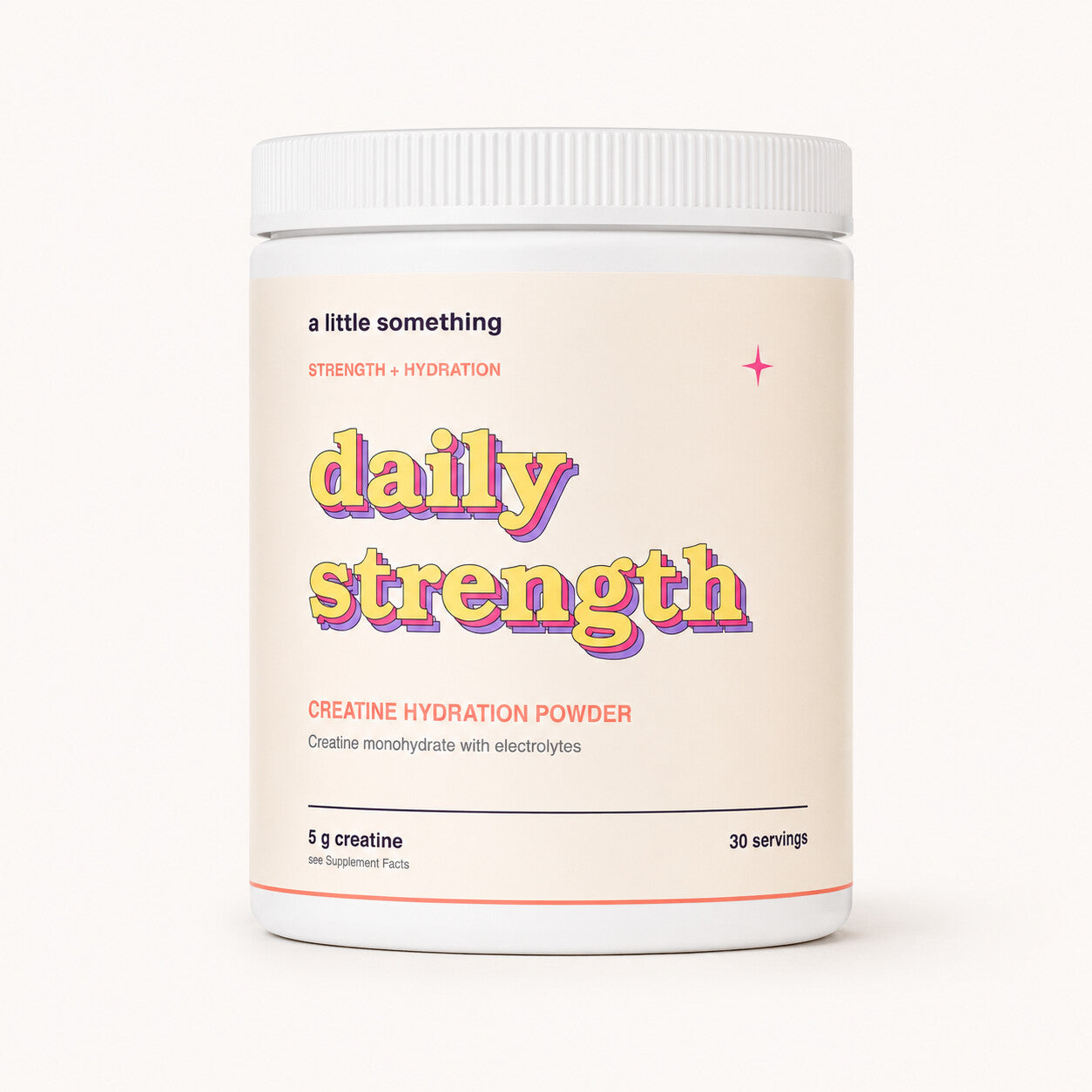
Creatine for women FAQs
Is creatine only for men or bodybuilders?+
No. Creatine's role in muscular energy is not male-specific, and research in women supports potential strength and exercise-performance benefits.
Can women take creatine every day?+
Daily maintenance dosing is commonly used in creatine research. Follow the directions for the specific supplement you use and discuss supplementation with a healthcare professional if you have medical conditions, take medications, are pregnant, or are breastfeeding.
Is creatine monohydrate the best-studied form?+
Yes. The NIH identifies creatine monohydrate as the most widely used and studied form of supplemental creatine.
Does creatine replace protein?+
No. Creatine and dietary protein have different roles. Creatine supports rapid cellular energy availability, while protein provides amino acids used throughout the body, including for muscle protein synthesis.
receipts, please
Sources
- NIH Office of Dietary Supplements — Dietary Supplements for Exercise and Athletic Performance
- Smith-Ryan AE, et al. Creatine Supplementation in Women's Health: A Lifespan Perspective. Nutrients. 2021.
- Risk of Adverse Outcomes in Females Taking Oral Creatine Monohydrate: A Systematic Review and Meta-Analysis.
This article is educational and is not medical advice. Dietary supplements are not intended to diagnose, treat, cure, or prevent disease. Speak with a qualified healthcare professional when appropriate for your circumstances.